We design optical tools with high spatial and temporal resolution to better control biological processes.
The Huang group
engineers light activatable materials with tunable photochemical properties,
understands the photochemical effects at the interface between biological systems and nanoscale materials, and
collaborates with clinicians and industry partners to translate laboratory findings into the clinic.
PHOTODYNAMIC THERAPY & PRIMING
Oncology, Neuroscience, and Phototoxicity
|
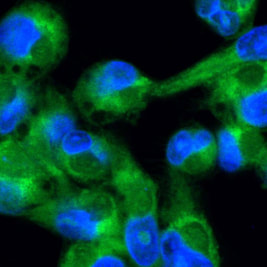
PHOTODYNAMIC THERAPY FOR CANCER
Photodynamic therapy is a photochemistry-based treatment that combines light-sensitive drugs (photosensitizers) and light to kill abnormal cells. Our lab examines the anti-tumor effects of photodynamic therapy alone and in combination with chemotherapy, biological agents, or antibiotics to identify the best combination regimens and optimize their scheduling and dosing. |
|
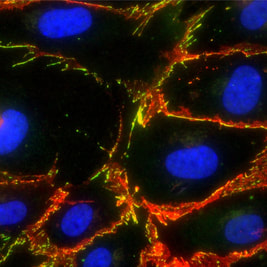
PHOTODYNAMIC PRIMING IN THE BRAIN
Photodynamic priming is a non-cytotoxic tool that involves light activation of photosensitizers to photochemically modulate nearby biomolecules without killing the cells. We study the mechanisms by which photodynamic priming can be exploited to modulate the bidirectional drug transport across the blood-brain barrier. |

|
PHOTOSAFETY EVALUATION OF PHARMACEUTICALS
There has been a large interest in developing different types of fluorescent contrast agents for biomedical imaging applications. Before being used in the clinic, these fluorescent dyes need to be proven safe for human use, in other words, the toxicity of these agents needs to be minimal compared to the benefit they provide. We collaborate with the Modulight and FDA to establish the least burdensome test methods for standardizing phototoxicity testing of contrast agent and imager combination products for fluorescence guided surgery or other clinical imaging applications. |
LIGHT ACTIVATABLE NANOTECHNOLOGY
Biomolecular Conjugates and Targeted Nanoparticles
|
PHOTO-IMMUNOCONJUGATES
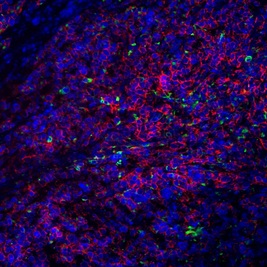
Photo-immunoconjugates are targeted antibodies equipped with photosensitizers. By delivering photosensitizers directly to tumors, the phototoxic side effects can be reduced. We discover and apply nanomaterials to improve the delivery, efficacy, and safety of photo-immunoconjugates. |
|
TARGETED PHOTO-ACTIVABLE MULTI-INHIBITOR LIPOSOMES
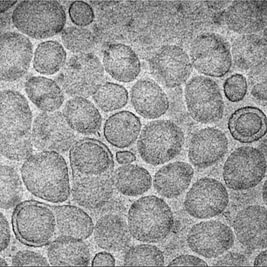
Despite the advances in therapeutic cocktails, without a breakthrough in drug delivery strategies and a solid mechanistic basis, the glioblastoma prognosis has remained unchanged for several decades. We leverage biochemical engineering and imaging to develop multi-compartment light-activatable nanoplatforms that can deliver three regimens in a unique manner — where one treatment primes the target for the second modality, and the subsequent evasion pathways are mitigated by a third agent. All agents are rationally selected and released in an appropriate time and sequence to account for mechanistic interactions and to improve outcomes. |
IMAGING, MODULATION & MODELING
Image Guidance and Molecular Modulation
|
IMAGE-GUIDED PHOTOTHERAPY
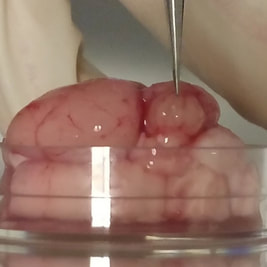
One of the challenges to photodynamic therapy for cancer is the phototoxicity to healthy tissues. To ensure that photodynamic therapy is safe, predictable, and customizable, we are developing image-guided strategies to inform the timing and dosimetry of light activation in the brain and peritoneal cavity. |
|
PHOTOCHEMICAL CONTROL OF PROTEIN FUNCTION
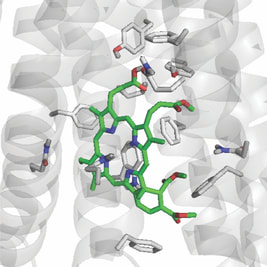
ATP-binding cassette (ABC) drug transporters are associated with the development of multidrug resistance and have long represented an oncologic target of immense interest. We are developing and testing photo-activable chemical switches to modulate the ATPase activity and protein integrity of ABC drug transporters. |